
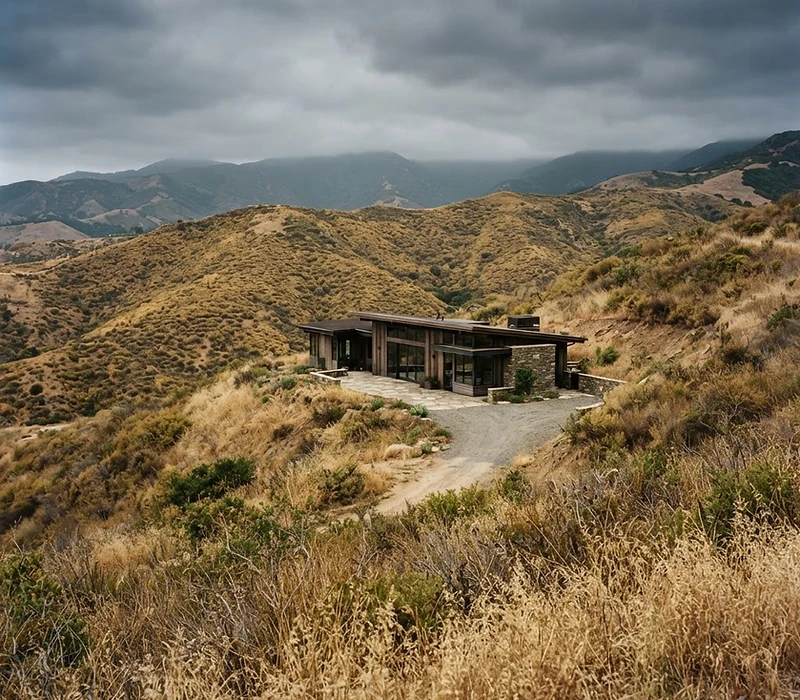
Difficult-to-insure California homes.
Some properties may have fewer standard-market options, but that does not always mean the California FAIR Plan is the only solution. We work with multiple standard and specialty insurance markets that may offer coverage for homes in areas or situations other carriers decline.
Wildfire exposure, roof age, older electrical systems, prior claims, vacancy, unusual property characteristics, and individual carrier underwriting guidelines can all affect eligibility. Because every carrier evaluates risk differently, we review multiple markets before determining which options may be available.
Several factors can shape which markets may be available for a difficult-to-insure property — and every carrier weighs them differently.
Wildfire Exposure
Homes in wildfire-exposed areas may have limited standard-market options.
Older Roofs
Roof age and condition can be a factor in carrier underwriting requirements.
Older Electrical Systems
Older electrical panels or wiring may raise eligibility concerns with some carriers.
Prior Claims
A history of prior claims may influence available coverage and pricing.
Vacancy or Non-Standard Occupancy
Vacant or non-standard occupancy may require different coverage solutions.
Unusual Property Characteristics
Age, construction type, and other property details can affect underwriting eligibility.
Carrier Eligibility Guidelines
Each carrier sets its own guidelines, which can limit options for certain properties.
There may be more than one path to coverage.
Depending on the property, there may be several possible solutions — and the California FAIR Plan is not automatically the first or only one. We start by reviewing the standard and specialty markets we work with.
When a standalone policy is available, it may offer broader coverage than the FAIR Plan. When it is not, the FAIR Plan — sometimes paired with a companion policy — may be part of the solution.
Standard Carriers
Some standard admitted carriers may still offer coverage depending on the specific property, location, and risk profile.
Specialty & Non-Admitted Carriers
Specialty and non-admitted (surplus lines) carriers are designed to consider properties that standard carriers may decline.
California FAIR Plan
When other appropriate options are not available, the California FAIR Plan may provide certain property coverage.
FAIR Plan With Companion Coverage
In some cases, the FAIR Plan is paired with a companion (DIC) policy to provide broader protection than the FAIR Plan alone.
A decline isn't the final word.
Many homeowners are told that a property is "hard to insure" after being declined by one or more carriers. That does not necessarily mean no traditional or specialty insurance options remain.
United Choice Insurance works with multiple insurance markets, including carriers that may consider properties in wildfire-exposed areas, older homes, homes with prior losses, and other risks that may fall outside traditional underwriting guidelines.
Our goal is to review the available markets first and determine whether a standalone insurance policy is available before relying on the California FAIR Plan.
Before assuming you need the FAIR Plan, let us review the property.
Understanding difficult-to-insure homes.
What makes a home 'difficult to insure'?
Factors such as wildfire exposure, older roofs, older electrical systems or panels, prior claims, vacancy, and unusual construction can limit standard-market options. Each carrier weighs these factors differently.
Does a decline from one carrier mean no coverage is available?
No. Different carriers have different underwriting guidelines. A property declined by one insurer may be accepted by another, including specialty or non-admitted markets.
What is a non-admitted carrier?
A non-admitted (surplus lines) carrier is not backed by the state guaranty fund but may offer coverage for risks that standard admitted carriers decline, subject to eligibility.
Is the FAIR Plan the only option for wildfire-exposed homes?
Not always. Some specialty carriers may offer coverage for wildfire-exposed properties. The FAIR Plan is one option among several, generally used when standard markets are unavailable.
How do I know which solution fits my property?
We review the property's characteristics, location, occupancy, and loss history against multiple markets to identify which options may be available.


Let us review your property.
Even if another carrier has declined the property or you were told the FAIR Plan may be required, there may still be additional insurance options available. Tell us about the property and we'll review the markets we work with.